


Over the past year, a number of school leaders I respect have quietly told me the same thing:
“We know digital accessibility is coming… we just don’t know how we’re supposed to get there.”
If you work in K-12 leadership today, you’ve probably heard similar concerns.
In March 2024, the U.S. Department of Justice finalized new rules requiring state and local governments—including every public school district—to ensure their websites, digital documents, and mobile applications are accessible to people with disabilities. To comply, districts must meet the Web Content Accessibility Guidelines (WCAG) 2.1 Level AA, the global standard for digital accessibility.
The deadlines are approaching quickly:
- April 2026 for larger districts
- April 2027 for smaller districts
At first glance, those timelines may seem manageable.
But once districts begin to inventory their digital content, the scope of the challenge becomes clear.
The Reality Inside Most School Districts
Consider the typical digital environment in a school district.
Thousands — sometimes tens of thousands — of documents exist across websites and digital systems, including:
- Board packets and meeting minutes
- District policies and procedures
- Enrollment forms and family communications
- Special education documentation
- Instructional materials and learning resources
Many of these files were created years — or decades — ago by different staff members using different tools, often without any accessibility workflow in place.
The result is a massive compliance gap.
Industry estimates suggest that nearly 90 percent of school PDFs are at least partially inaccessible, meaning they cannot be fully interpreted by screen readers or other assistive technologies used by people with disabilities.
This reality is not a reflection of neglect by educators.
It is simply the product of how digital systems evolved in education over time.
But as federal expectations tighten, the consequences of inaction are becoming more serious.
Accessibility Is No Longer Optional
Digital accessibility is no longer a “nice-to-have” initiative. It is a legal requirement — and increasingly, a leadership responsibility.
Across the country, ADA-related digital accessibility lawsuits are rising, exposing schools, universities, and municipalities to legal risk and costly settlements.
Districts that fail to address accessibility issues may face:
- Litigation and legal expenses
- Federal oversight or compliance agreements
- Loss of trust within their communities
- Potential risk to federal funding eligibility
Yet the most important reason to act is not legal risk.
It is equity.
When digital content is inaccessible, students with disabilities and their families may be unable to access critical information about their education, including enrollment materials, policies, schedules, and learning resources.
In other words, accessibility is about more than compliance.
It is about ensuring every member of the community can fully participate in public education.
The Traditional Approach Isn’t Sustainable
Historically, the primary way to remediate digital documents for accessibility has been manual remediation.
That process involves trained specialists reviewing documents one page at a time to:
- Add structural tagging
- Correct reading order
- Label images with alternative text
- Ensure compatibility with screen readers
While effective, this approach can be extremely expensive.
Traditional document remediation often costs between $5 and $25 per page, and large districts can have tens of thousands of pages requiring correction.
For many school systems, this creates a difficult reality:
The cost and time required to remediate existing documents can feel overwhelming.
How AI Is Changing the Equation
In recent years, however, advances in artificial intelligence have begun to transform the accessibility landscape.
AI-assisted tools can now:
- Automatically scan documents for accessibility issues
- Identify structural problems and missing tags
- Remediate large volumes of PDFs in minutes rather than weeks
- Continuously monitor websites for new accessibility issues
By combining automation with expert human validation, districts can address accessibility challenges far more efficiently than in the past.
This hybrid model — AI plus expert oversight, or human-in-the-loop — has the potential to reduce remediation costs dramatically while still ensuring compliance and accuracy.
A Practical Approach for Schools
Recognizing the scale of the challenge many districts face, our team at RocketPD has been working with two partners — archSCAN and Accessibility on Demand (AoD) — to provide schools and districts in our community with practical approach to digital accessibility.
The goal is simple:
Make compliance possible and manageable, not overwhelming.
Together, we have developed a model that combines:
- Automated accessibility scanning
- AI-assisted document remediation
- Expert human quality assurance
- Transparent token-based pricing
- Continuous monitoring of digital content
This approach allows districts to remediate documents incrementally rather than attempting an expensive, one-time remediation project.
It also helps leaders prioritize the most important documents first — such as enrollment materials, policies, and board communications — while building sustainable workflows for future content.
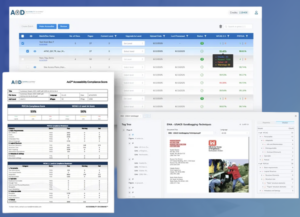
A portal for ADA digital document remediation with reporting features
Watch a 3-minute video
https://accessiblek12.org/see-how-it-works-in-under-a-minute/
A Resource for School Leaders
To help educators understand the new accessibility landscape, we created a dedicated microsite and guide.
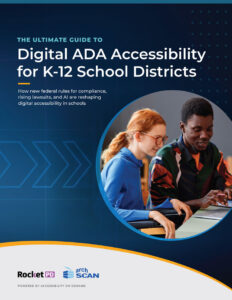
Free Guide: Digital ADA Accessibility for K-12 School Districts https://accessiblek12.org/
Accessible K-12.org
Inside the guide, school leaders will find:
- A clear explanation of the DOJ’s new accessibility requirements
- The real scope of the digital accessibility challenge in schools
- A five-step roadmap for preparing districts for compliance
- Insights from educators and accessibility experts
- A practical way to test accessibility remediation with 100 free document credits
Our hope is that this resource will help leaders begin informed conversations within their districts about how to move forward.
Why This Conversation Matters Now
Digital accessibility will be one of the most significant operational challenges school districts face over the next several years.
But it is also an opportunity.
Districts that begin preparing now can:
- Reduce legal risk
- Build sustainable accessibility workflows
- Improve transparency and communication with families
- Strengthen trust across their communities
Most importantly, they can ensure that every student and family has access to the information they need to participate fully in public education.
The deadlines are approaching quickly.
But with the right tools, planning, and collaboration, the work ahead is manageable.
And the sooner districts begin the conversation, the better positioned they will be to succeed.
Learn More
To explore the issue further and access the full guide and microsite.
If you work in K-12 leadership and would like to discuss how your district is approaching digital accessibility, we would welcome the conversation.
Because accessibility is not just about compliance.
It is about equity, trust, and ensuring that every member of our community can access the full promise of public education.
Want an idea for how your district is tracking before the deadline?
Take our three minute diagnostic and get 100 Free Credits to test the portal with your own documents.


